Strengthening Academic Integrity and the Risk of Cheating in Educational Institutions
Article Sidebar
Published:
Jan 1, 2026
Keywords:
Cheating, Integrity, Education, Maliki Jurisprudence, Moral Values, Islamic Law.
Main Article Content
Abstract
This study addresses cheating as one of the most serious issues threatening the educational system and undermining moral values in society. It aims to clarify the concept of cheating and its legal ruling in Islamic law, supported by evidence from the Qur'an, the Prophetic Sunnah, and the opinions of Maliki jurists. The research demonstrates that cheating is strictly prohibited in Islam and is considered a major sin due to its elements of deception and betrayal. This is supported by clear textual evidence, such as the Qur'anic verse: “Woe to those who give less [than due]” and the Prophet’s saying: “Whoever cheats is not one of us.” The study also highlights the stance of Maliki scholars, who emphasized the prohibition of all forms of fraud and deception, based on fundamental principles such as blocking the means to harm (Sadd al-Dhara’i). Furthermore, the research examines the negative impacts of cheating on religious, educational, social, and economic levels. It leads to poor academic achievement, loss of trust, corruption of competencies, and ultimately hinders sustainable societal development. The study also emphasizes the role of teachers in combating cheating, stressing that teaching is a great trust and that assisting students in cheating is religiously forbidden, as it constitutes cooperation in sin. Legitimate support, however, should be provided through facilitation, consideration of individual differences, and fostering students’ independence. The study concludes that combating cheating is a shared responsibility among students, teachers, families, and educational institutions, and that addressing this issue is essential for preserving ethical values and building a competent and trustworthy society.
Article Details
How to Cite
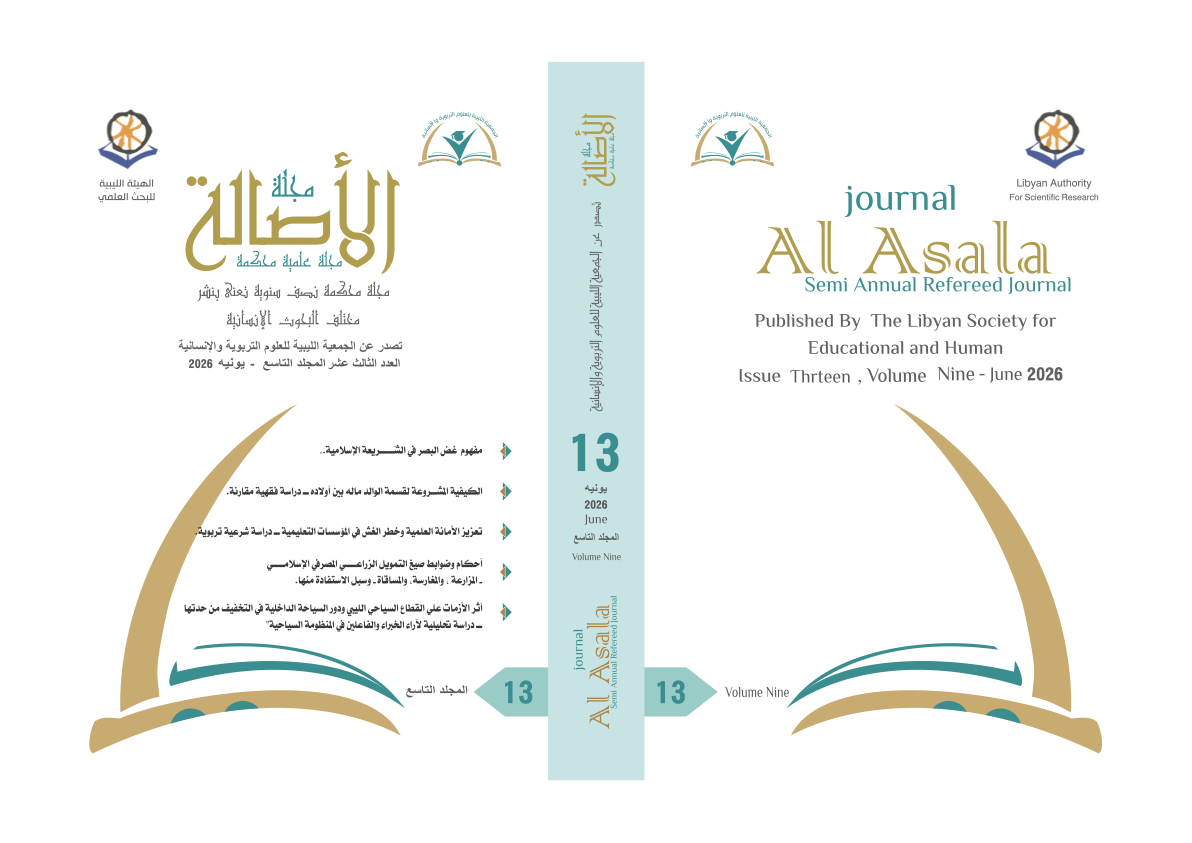
Al-Shuwaib ن. ع. (2026). Strengthening Academic Integrity and the Risk of Cheating in Educational Institutions. Alasala Journal, 9(13), 230–240. Retrieved from https://alasala.alandalus-libya.org.ly/ojs/index.php/aj/article/view/1891
Section
Articles

This work is licensed under a Creative Commons Attribution 4.0 International License.